
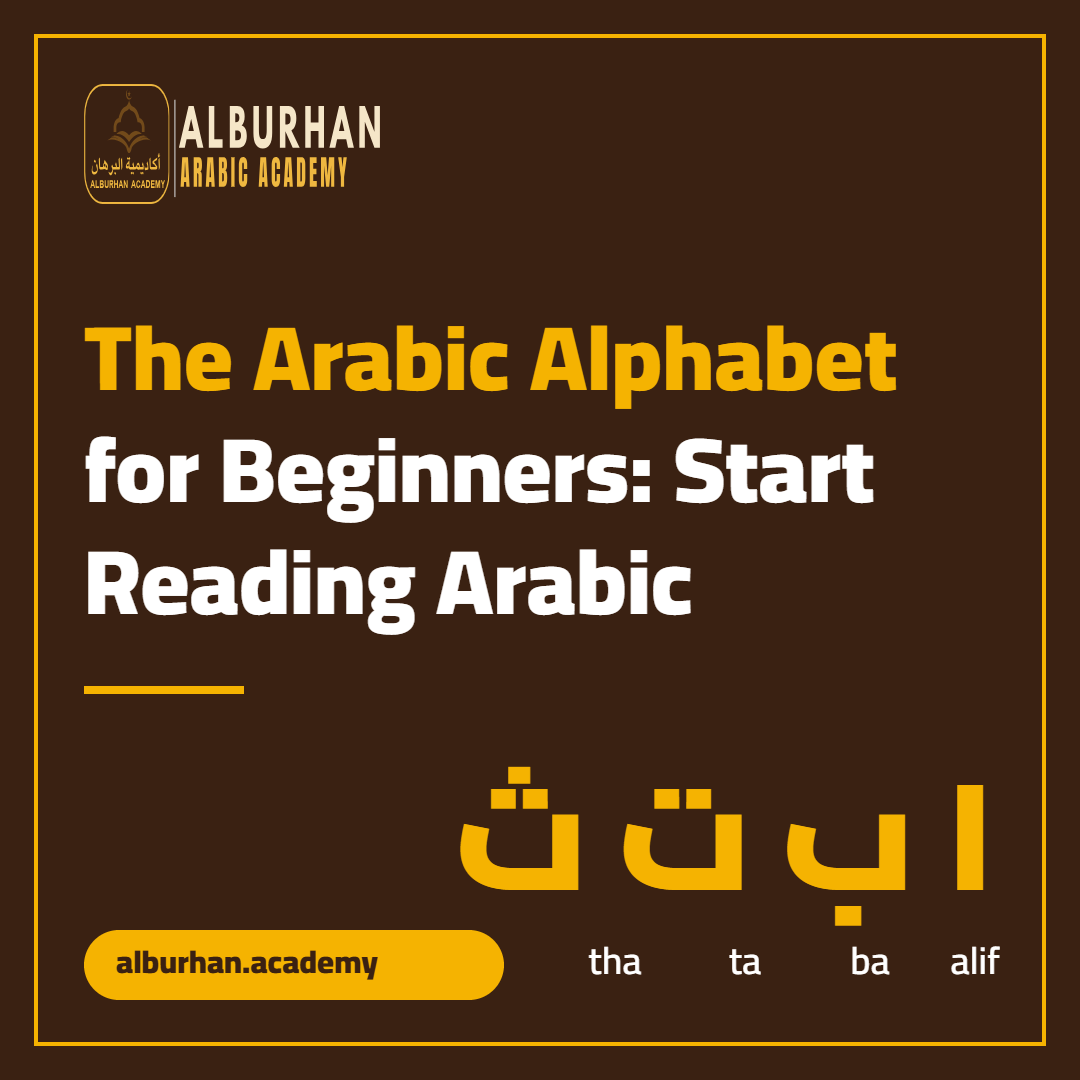
Arabic script looks difficult at first, but it follows clear rules. There are only 28 letters, and each letter keeps the same sound in almost every word. Most beginners can learn to read simple words in a few weeks. This guide shows you where to start.
Five facts about Arabic writing
- Arabic has 28 letters.
- It is written and read from right to left.
- There are no capital letters.
- Most letters join to the letter after them, like handwriting.
- Short vowels are small marks above or below the letters.
Letters change shape
A letter can look a little different at the start, in the middle and at the end of a word. The main part of the letter stays the same. Take the letter ba (ب). At the start of a word it is written بـ, in the middle ـبـ and at the end ـب. Once you know the main shape and the dot, you can find it anywhere.
Six letters that do not join forward
Six letters never join to the letter that comes after them: alif (ا), dal (د), dhal (ذ), ra (ر), zay (ز) and waw (و). This is why some Arabic words seem to have a small gap inside them.
Dots matter
Many letters share one shape and differ only by dots. Ba (ب) has one dot below, ta (ت) has two dots above and tha (ث) has three dots above. Learn these letters in groups. It is faster than learning them one by one.
Short and long vowels
The short vowels are called harakat. Fatha gives an a sound, kasra gives an i sound and damma gives a u sound. The long vowels are written with the letters alif (ا), waw (و) and ya (ي). Our article What are harakat in Arabic? explains the marks with examples.
Sounds that are new for English speakers
A few Arabic sounds do not exist in English, such as ayn (ع), ha (ح), kha (خ) and qaf (ق). You cannot learn these from a chart. Listen to a native speaker and repeat until your ear catches the difference.
A simple four-week plan
- Week 1: learn the letters in shape groups, five or six a day.
- Week 2: add the three short vowels and read two-letter sounds such as ba, bi, bu.
- Week 3: practise joining letters and read short words.
- Week 4: add long vowels and read simple sentences aloud.
Tips that help
- Study for fifteen minutes every day instead of one long session.
- Say every letter aloud while you write it.
- Always use audio, so you learn the correct sound from the start.
- Read real things around you: shop signs, product labels and street names.
Start reading today
Our self-study course Read Arabic from Zero teaches the letters and first words in 20 short lessons with real Arabic audio, games and a certificate. It suits children and adult beginners. If you want to speak as well as read, book a free trial class with one of our teachers.
Add New Comment