
Greetings are the first thing people notice when you speak Arabic, and in Saudi Arabia they matter even more. A warm hello opens the conversation, shows respect, and often changes how people treat you. The good news is that Saudi greetings are short, repeat the same patterns, and are easy to learn. This guide gives you the phrases you will actually hear, with the Arabic, the pronunciation and the meaning.
1. Saying hello
The most common greeting in any Arabic-speaking country is as-salāmu ʿalaykum. The reply is slightly different, and it is polite to give it in full.
| Arabic | Pronunciation | Meaning |
|---|---|---|
| السَّلَامُ عَلَيْكُمْ | as-salāmu ʿalaykum | Peace be upon you (the standard greeting) |
| وَعَلَيْكُمُ السَّلَامْ | wa ʿalaykumu s-salām | And peace be upon you (the reply) |
| مَرْحَبَا | marḥaba | Hello |
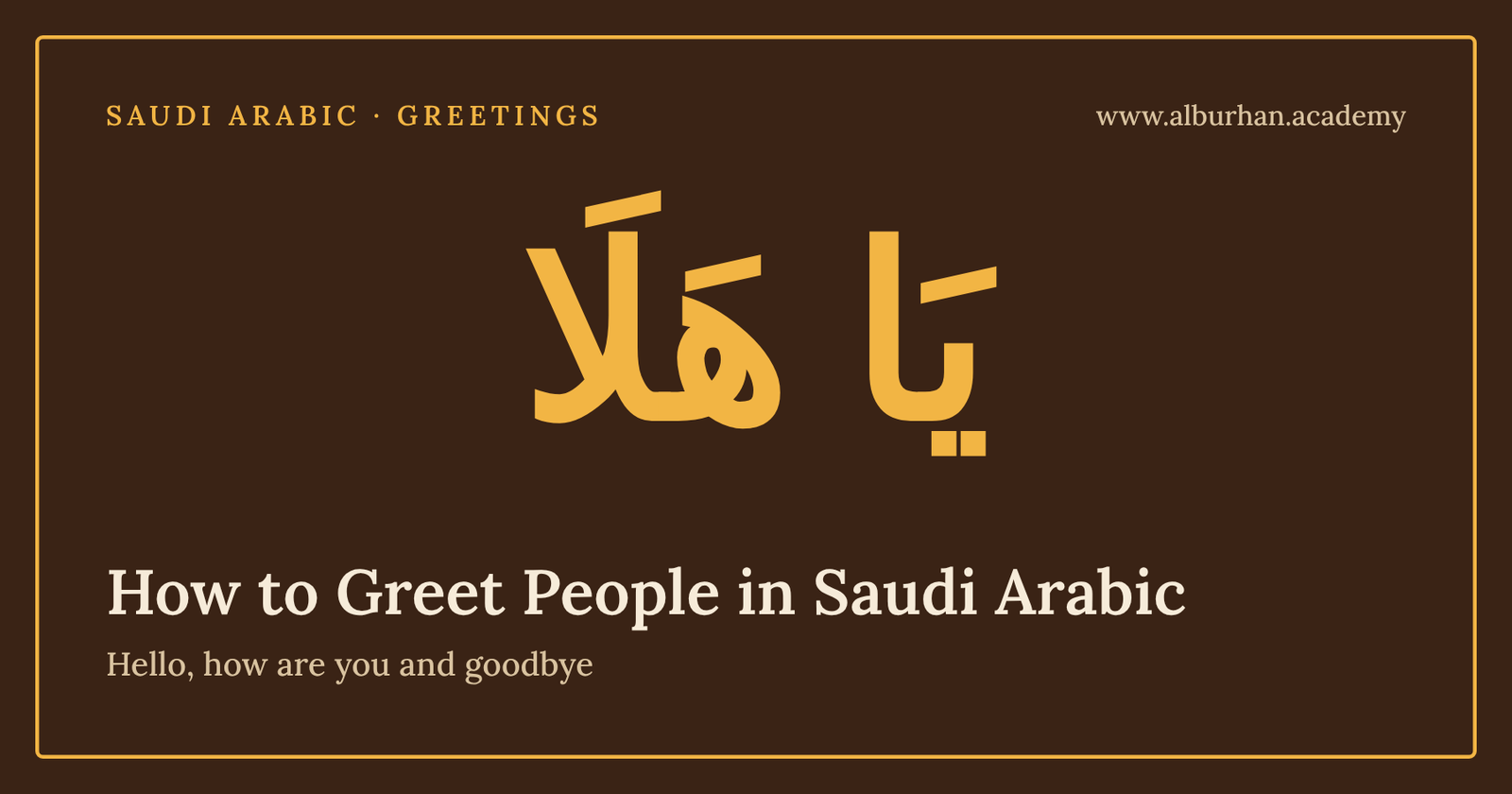
| يَا هَلَا | yā hala | Hello / welcome (very common in Saudi Arabia) |
| حَيَّاكَ اللَّه | ḥayyāk Allāh | Welcome (to a man). To a woman: ḥayyāki Allāh |
2. Good morning and good evening
Arabic greetings usually get an answer that is a little warmer than the greeting itself. This is a nice habit to copy.
| Arabic | Pronunciation | Meaning |
|---|---|---|
| صَبَاحُ الخَيْر | ṣabāḥ al-khayr | Good morning |
| صَبَاحُ النُّور | ṣabāḥ an-nūr | Good morning (the reply: "morning of light") |
| مَسَاءُ الخَيْر | masāʾ al-khayr | Good evening |
| مَسَاءُ النُّور | masāʾ an-nūr | Good evening (the reply) |
3. How are you?
In Saudi Arabic, "How are you?" changes slightly depending on whether you speak to a man or a woman. The ending -ak is for a man and -ik is for a woman.
| Arabic | Pronunciation | Meaning |
|---|---|---|
| شْلُونَكْ؟ | shlōnak? | How are you? (to a man) |
| شْلُونِكْ؟ | shlōnik? | How are you? (to a woman) |
| إِيشْ أَخْبَارَكْ؟ | ēsh akhbārak? | What's your news? (to a man) |
| الحَمْدُ لِلَّه، تَمَام | al-ḥamdu lillāh, tamām | Thank God, I'm fine |
| وَإِنْتَ؟ | wa inta? | And you? (to a man). To a woman: wa inti? |
4. Meeting someone for the first time
When you meet someone new, a short exchange makes a very good first impression.
- تَشَرَّفْنَا (tasharrafnā): "Pleased to meet you."
- الشَّرَف لَنَا (ash-sharaf lanā): "The honour is ours." This is the reply.
- اللَّه يُعْطِيكَ العَافِيَة (Allāh yuʿṭīk al-ʿāfiya): "May God give you strength." Saudis say it to thank someone for their effort, for example a teacher, a doctor or a shop assistant.
5. Saying goodbye
| Arabic | Pronunciation | Meaning |
|---|---|---|
| مَعَ السَّلَامَة | maʿa s-salāma | Goodbye (go with peace) |
| فِي أَمَانِ اللَّه | fī amāni llāh | Goodbye (in God's protection) |
| تُصْبِحْ عَلَى خَيْر | tuṣbiḥ ʿalā khayr | Good night (to a man) |
Three simple tips
- Greet first, then talk. Even in a shop or at work, start with a greeting before you ask your question.
- Answer with more than you were given. If someone says marḥaba, replying marḥabtayn ("two welcomes") sounds friendly and natural.
- Watch the gender. The endings -ak and -ik are the most common small mistake for beginners, and people will always understand and forgive you.
Practise with a teacher
Reading phrases is a start, but greetings only feel natural when you say them out loud and hear the answer. In our live online classes at AlBurhan Arabic Academy, you practise real conversations in Saudi Arabic with a teacher from the first lesson, and the recording of every class is included. You can start with a free trial class and see how it feels. Visit www.alburhan.academy to book your seat.
Add New Comment